Stop chasing shiny objects and close the tab if you are looking for an overnight miracle shortcut. Let’s get brutally honest right out of the gate: 95% of online entrepreneurs fail not because they lack passion, but because they build fragile, fragmented toys instead of scalable systems. They piece together ten different monthly subscriptions: costing anywhere from $49 to $297 each: hoping that duct-tape and wishful thinking will magically turn into a six-figure income.
It won't.
When your traffic spikes by 300% or your subscriber list crosses 5,000 active contacts, fragile systems break. Links fail, landing pages crash, tracking pixels misfire, and revenue flatlines. If you want a business that generates predictable revenue month after month, you need to understand what makes an online system truly scalable and why long-term viability requires ruthless structural integrity from day one.
The Scalability Illusion: Why Most Online "Businesses" Collapse at $3,000/Month
Every day, gurus peddle the myth that making money online is effortless. They show screenshots of $500 days while omitting the 18 hours of manual labor required to maintain a rickety, unscalable funnel.
Reality Check: A business that requires you to manually copy-paste links, answer individual direct messages for 6 hours a day, and fix broken API integrations every Tuesday is not a business. It is a grueling job where you happen to be your own tyrannical boss.
True scalability means your operational overhead and labor hours do not scale linearly with your revenue. If doubling your revenue requires doubling your working hours from 40 to 80 hours a week, your system is fundamentally broken. Scalability is about leverage: building an infrastructure where incoming traffic, conversion mechanisms, and customer onboarding operate with frictionless, automated precision.
To understand how to build this, we must examine the core structural tiers required for long-term survival.
Pillar Architecture: The Foundation of a $10,000/Month Infrastructure
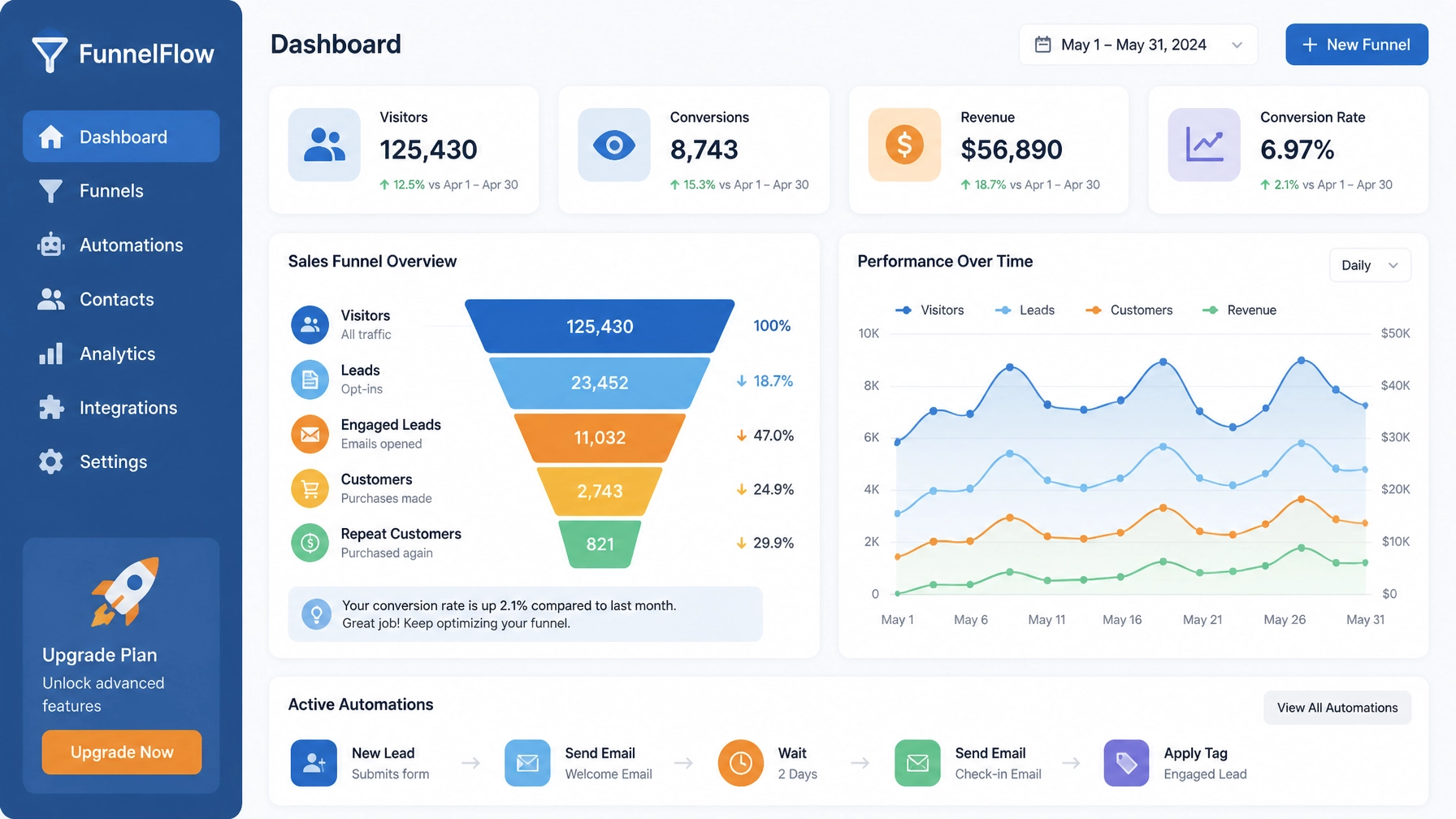
A scalable online system relies on a rigid Pillar Architecture. If any single pillar is weak, the entire structure collapses under the weight of scaling traffic.
Let's break down the three non-negotiable pillars:
- Centralized Hubs (Link-in-Bio & Landing Pages): You cannot afford to scatter your audience across twenty different dead-end links. You need an anchor point: a professional landing page or clean link hub that captures attention immediately and routes visitors directly into your primary conversion vector. Instead of wasting time coding custom frameworks, smart operators utilize all-in-one solutions like the Daily-Ads platform to instantly deploy hosted landing pages and link hubs without technical friction.
- Unified Advertising & Traffic Generation: Relying solely on organic social media algorithms is like playing roulette with your livelihood. Scalable systems integrate active, predictable traffic loops such as banner ads, login ads, and curated swipe feeds that deliver guaranteed daily impressions. For a deeper look at structuring your promotional efforts, explore the Daily-Ads Blog.
- Automated Follow-Up & Broadcasts: Manual emailing is dead. Scalable systems rely on pre-built broadcast sequences and automated autoresponders that nurture cold traffic into high-ticket buyers while you sleep.
The Truth: If you are paying for five different standalone tools that don't talk to each other, you are bleeding capital and wasting valuable focus. Consolidating your marketing suite into an integrated environment is the fastest way to slash overhead and eliminate technical debt.
Traffic Automation vs. Manual Grind: Reverse-Engineering Predictable Acquisition
Let's look at the math of scaling. If your conversion rate from visitor to lead is 2%, and your lead-to-sale conversion is 3%, you need exactly 16,666 targeted monthly visitors to generate 100 sales of a $50 product ($5,000 in gross revenue).
[16,666 Visitors] ---> (2% Conv.) ---> [333 Leads] ---> (3% Conv.) ---> [10 Sales @ $50 = $5,000]
How do you get 16,666 visitors reliably every month?
- If you rely purely on organic posting, you are at the mercy of platform algorithms that change their minds overnight.
- If you rely on paid ads without a tested funnel, you will burn through your ad budget in 72 hours.
This is why scalable systems incorporate multi-channel advertising networks. By embedding your promotions across high-traffic community login pages, rotational banner networks, and daily swipe feeds, you capture active eyeballs that are already primed for online business opportunities.
Stop spinning your wheels trying to reinvent traffic acquisition. Tap into existing high-intent ecosystems where buyers congregate daily.
Data-Driven Decisions: Cutting the Noise and Measuring Real ROI
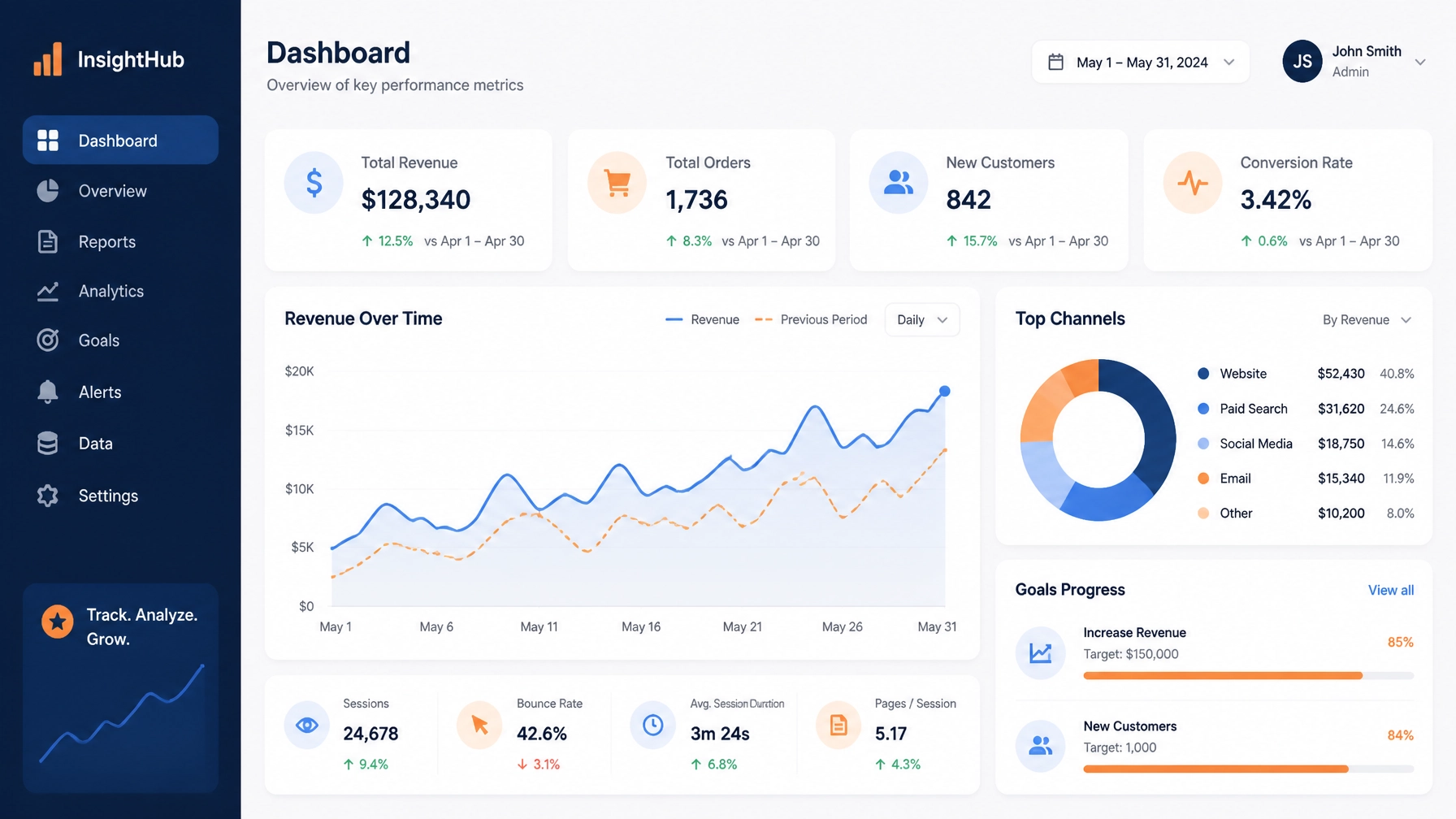
Amateurs make decisions based on emotion, excitement, and gut feelings ("My new color scheme looks amazing!"). Professionals make decisions based on hard metrics, conversion percentages, and cost-per-acquisition (CPA).
If you want your system to scale from $3,000 to $30,000 per month, you must track three vital metrics relentlessly:
- Click-Through Rate (CTR): Are your banner ads, login ads, and social posts actually commanding attention?
- Cost Per Lead (CPL): Exactly how much capital or time does it cost to acquire an email subscriber?
- Earnings Per Click (EPC): When a visitor lands on your central hub, how much revenue does every single click generate?
When you know your EPC is $1.20 and your CPL is $0.80, marketing stops being a gamble and starts being a predictable machine: you put dollars in, and predictable revenue comes out.
For guidance on how to organize your marketing campaigns and leverage proven promotional formats, check out the resources available on the Daily-Ads Platform.
The 90-Day Execution Blueprint: From Fragmented Chaos to Systems Domination
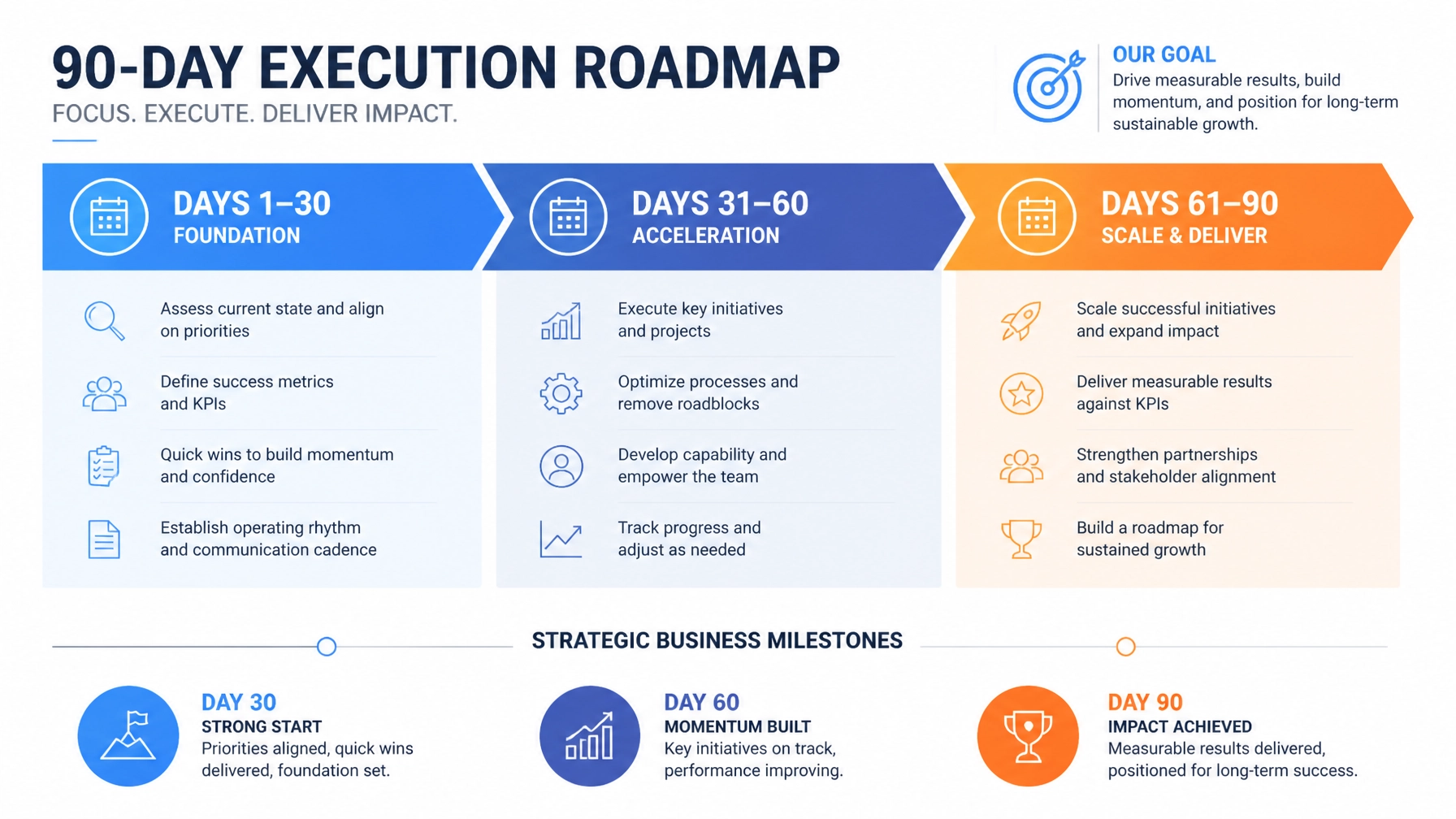
Most people quit in the messy middle: that uncomfortable phase between Day 14 and Day 60 where traffic is trickling in, conversions are small, and frustration peaks. To push through, you need a strict 90-day execution window divided into three 30-day sprints:
Days 1–30: Foundation & Infrastructure
- Eliminate clutter: Cancel disjointed monthly subscriptions and consolidate your tools into a unified marketing suite like Daily-Ads.
- Set up your hub: Deploy your centralized link-in-bio page and professional landing pages with hosting included.
- Establish baseline tracking: Ensure your analytics and conversion pixels are active on every page.
Days 31–60: Traffic & Acquisition Testing
- Deploy multi-format advertising: Activate banner ads, login ads, and swipe feeds to test audience response across different placements.
- Engage the community: Participate in active member chats and social feeds to build organic trust and authority.
- Optimize copy: A/B test your headlines and call-to-action buttons until your CTR improves by at least 15%.
Days 61–90: Scaling & Automation
- Scale winning campaigns: Double down on the ad placements and traffic sources that yield the highest EPC.
- Automate follow-ups: Streamline your email broadcast schedules to maintain high engagement without manual daily intervention.
- Review and refine: Analyze your 90-day data metrics, cut any underperforming dead weight, and optimize your profit margins.
Conclusion: Commit to the System or Stay Stuck in the Grind
Scalability is not an accident. It is the direct result of rigorous architecture, consolidated tools, data-backed optimization, and unyielding 90-day discipline. If you keep duct-taping random tools together and hoping for a breakthrough, you will remain trapped in the exact same spot twelve months from now.
Close the tab on shortcuts. Audit your marketing stack today, eliminate the friction, and build an online system designed to scale for the long haul. Head over to Daily-Ads to explore our all-in-one suite and start building your scalable system with a generous Free Forever Plan: no credit card required.