The Anatomy of a Simple Online Income System That Actually Works
Let me show you something most people never see: the actual blueprint of a working online income system. Not the fantasy version sold in webinars. Not the "push button profit" nonsense. The real, unglamorous, proven structure that generates consistent income for people who actually build it.
I'm going to break down every single component, explain why each piece matters, show you how they connect, and give you the honest timeline for implementation. No hype. No exaggeration. Just the mechanical reality of what an automated income stream looks like when you strip away the marketing language.
If you're tired of vague advice about "building a business" and want to see the actual architecture that works, this is it. Let's dissect the machine.
The Core Framework: Five Essential Components
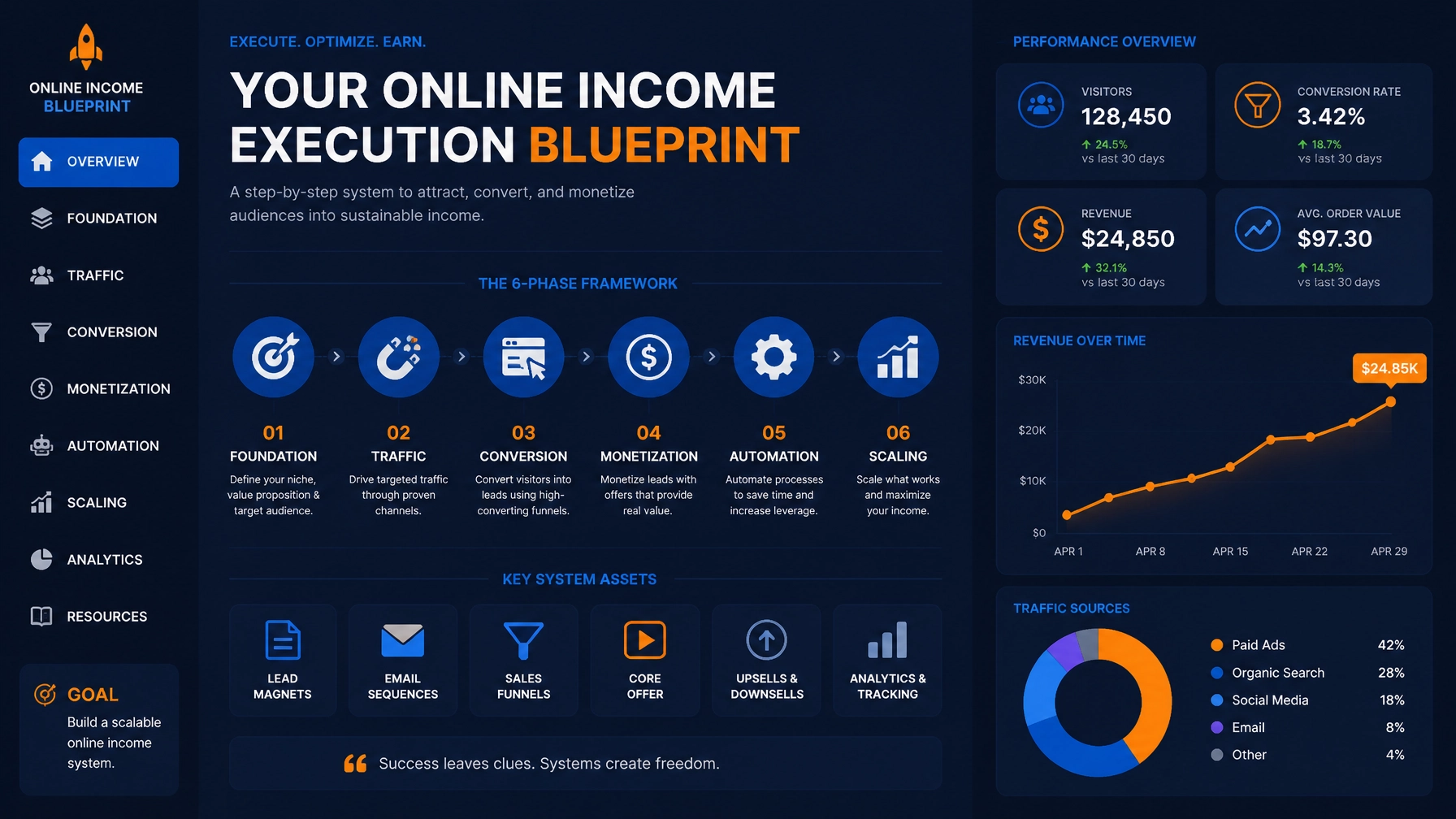
Every functional online income system—regardless of niche, audience, or business model—contains these five components. Miss one, and your system has a critical failure point. Nail all five, and you have something that can generate revenue predictably and sustainably.
Component 1: The Value Creation Engine
This is what you're actually selling—the product, service, or offer that solves a specific problem for a specific person. Without genuine value creation, everything else is just noise.
Your value creation engine must answer three questions definitively:
- What problem does this solve? Not vague benefits like "improve your life," but specific, measurable problems like "reduce email management time by 5 hours per week"
- Who specifically has this problem? Not "anyone who wants to make money," but "software engineers earning $80K+ who want to negotiate higher salaries"
- Why should they buy from you? What's your unique mechanism, approach, or perspective that differentiates you from the dozen other people solving similar problems?
Most failing systems have weak value creation engines. They're selling something that either doesn't solve a real problem, targets too broad an audience, or offers nothing distinctive. Fix this first, or nothing else matters.
The Offer Clarity Test: If you can't explain your offer in one sentence that a stranger immediately understands, your value creation engine needs work. "I help overwhelmed entrepreneurs systematize their operations to reclaim 15+ hours per week" is clear. "I'm a business coach helping people achieve their goals" is useless.
Component 2: The Traffic Generation System
Value without visibility is worthless. Your traffic generation system is how potential customers discover you exist. This is where most people get distracted by shiny objects—trying every platform, chasing every trend, spreading themselves impossibly thin.
Effective traffic generation follows a simple principle: dominate one channel before adding others. Pick one primary traffic source and commit to it for at least 6-12 months:
Organic Options:
- SEO-driven content (blog posts, videos, podcasts targeting specific search terms)
- Platform-specific content (YouTube, Instagram, LinkedIn, TikTok—choose one)
- Community building (Facebook groups, Discord servers, Slack communities)
- Strategic partnerships (guest posting, podcast interviews, collaborations)
Paid Options:
- Facebook/Instagram ads targeting specific demographics and interests
- Google Ads targeting commercial intent keywords
- YouTube ads for video-based offers
- Sponsored content and influencer partnerships
The mistake is trying all of them simultaneously. The strategy is picking one that matches your strengths and audience, then executing it consistently until you've achieved predictable results. Only then do you consider adding a second channel.
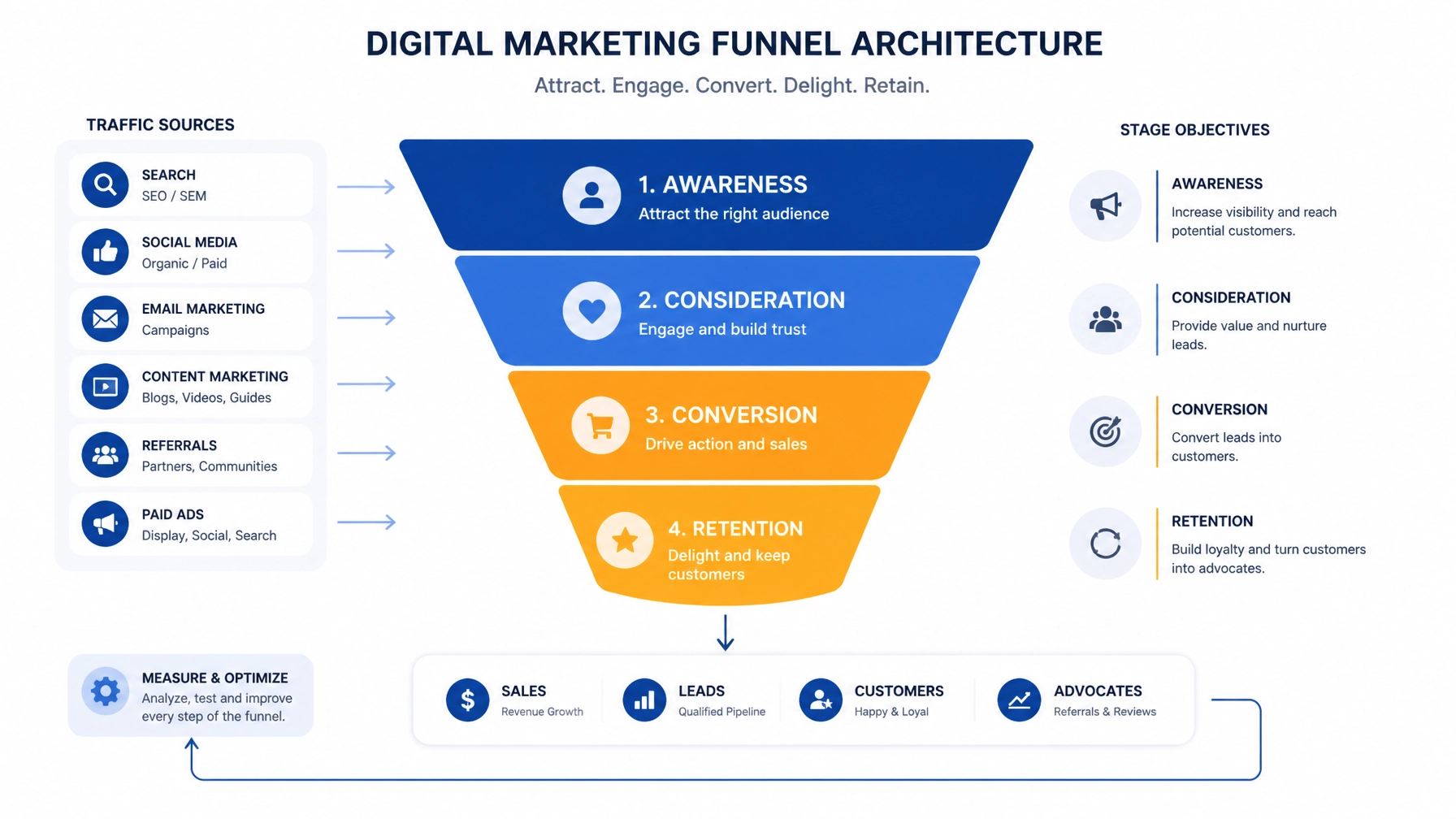
Component 3: The Conversion Mechanism
Traffic that doesn't convert is just expensive attention. Your conversion mechanism transforms visitors into customers—or at minimum, captures their contact information so you can continue the conversation.
A working conversion mechanism includes:
Primary Conversion Path: Landing page → Clear offer → Simple checkout. Remove every unnecessary step, distraction, and friction point. One page, one offer, one call-to-action.
Secondary Capture Path: For people not ready to buy, you need a lead magnet that captures their email in exchange for something immediately valuable. This is your insurance policy against lost traffic.
Nurture Sequence: Automated email series that builds trust, demonstrates expertise, addresses objections, and makes strategic offers over time. This is where most revenue actually comes from—not the first touchpoint, but the sixth or seventh.
Most systems fail at conversion because they either ask for too much too soon (buy this $2000 course now!) or too little (just subscribe to my newsletter!). The balance is offering a clear next step appropriate to the visitor's awareness level.
The Conversion Rate Reality: Don't expect 50% conversion rates. In reality, 2-5% landing page to sale conversions are solid for most offers. 20-40% for email opt-ins is good. 1-3% email-to-purchase conversion is normal. If your numbers are significantly worse, you have messaging or offer problems, not traffic problems.
Component 4: The Delivery Infrastructure
This is how you actually provide what you promised. For many people, this is the scariest part because it requires real competence—but it's also where sustainable businesses separate from scams.
Your delivery infrastructure must be:
Scalable: Can handle 10 customers as easily as 1000. This typically means digital delivery—courses, templates, software access—rather than one-on-one time-intensive services.
Consistent: Every customer gets the same quality experience. Documented processes, templates, and systems ensure this even as you grow.
Results-oriented: Focuses on helping customers achieve the outcome you promised, not just delivering information. This generates testimonials, referrals, and repeat business.
For digital products: membership site or course platform with automated delivery. For services: clearly documented processes, templates, and systems that reduce custom work. For physical products: reliable fulfillment and shipping partnerships.
Component 5: The Optimization Loop
This is the component that separates beginners from professionals. A system without optimization slowly decays. Markets shift, competition emerges, platforms change algorithms. Static systems die.
Your optimization loop includes:
- Metrics tracking: Traffic sources, conversion rates, average order value, customer lifetime value, churn rate
- A/B testing: Headlines, offers, pricing, email sequences—systematically testing variables to improve performance
- Customer feedback: Surveys, interviews, support tickets—understanding what's working and what isn't from the people actually using your system
- Competitive analysis: Watching what others in your space are doing, identifying opportunities they're missing
- Strategic iteration: Making informed improvements based on data, not hunches or the latest trend
Plan to spend 20% of your time optimizing even after your system is built and working. This continuous improvement is what allows systems to scale from $1K/month to $10K/month to $100K/month.
How These Components Connect: The System in Action
Let's see how these five components work together in a real example. We'll use a simplified scenario—someone teaching freelance writers how to land high-paying clients:
Value Creation Engine: A $297 course teaching freelance writers a specific outreach system that's generated $500K+ in client contracts. The offer solves a specific problem (getting clients) for a specific person (freelance writers) with a unique approach (proven outreach templates and strategy).
Traffic Generation System: Weekly YouTube videos teaching valuable freelance writing tips, optimized for search terms like "how to find freelance writing clients" and "freelance writing cold email templates." Videos include calls-to-action driving viewers to the landing page.
Conversion Mechanism: Landing page offers a free "5 Cold Email Templates That Generated $100K in Contracts" PDF in exchange for email signup. Email sequence delivers the PDF, provides additional value, tells the creator's story, addresses common objections, and presents the paid course offer on day 7. Those who don't buy continue receiving weekly value-driven emails with periodic course promotions.
Delivery Infrastructure: Course hosted on Teachable or similar platform. Immediate access upon purchase. Organized into modules with video lessons, downloadable templates, and action steps. Private Facebook group for student support and accountability.
Optimization Loop: Monthly review of which YouTube videos drive the most conversions. A/B testing email subject lines and landing page headlines. Quarterly student surveys to improve course content. Annual pricing evaluation based on market research and competitor analysis.
See how each component connects to and supports the others? That's a system. Remove any component, and the whole thing breaks down.
Signs Your System Is Working:
- Consistent traffic arriving daily without you manually hustling for it
- Predictable conversion rates you can calculate and forecast
- Sales happening while you're sleeping, traveling, or focused elsewhere
- Customer success stories and testimonials arriving regularly
- Revenue growing month-over-month with same or less effort
- Clear data showing what's working and what needs improvement
- Ability to step away for a week without income dropping to zero
Signs Your System Has Gaps:
- Inconsistent traffic requiring constant manual effort to generate
- No clear conversion path from visitor to customer
- Sales only happening when you're actively promoting
- Customer complaints or delivery issues indicating broken infrastructure
- Stagnant revenue despite increased effort
- No data or metrics to guide improvement decisions
- Everything collapses the moment you stop working
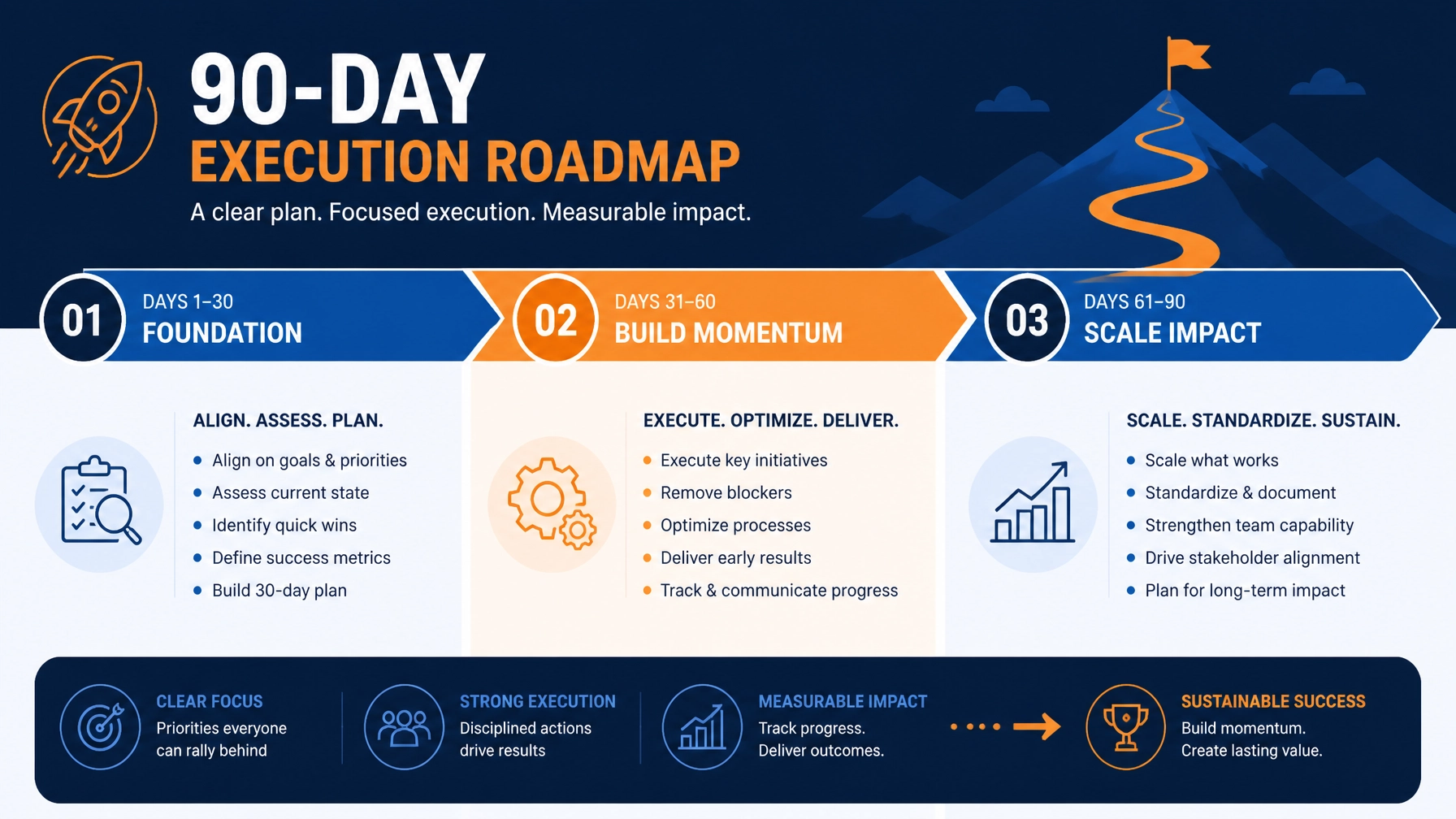
The Realistic Timeline: What to Expect When Building
Here's the part most people don't want to hear but desperately need to know: building a functional system takes time. The timeline below reflects reality for someone working part-time (10-15 hours/week) on their system:
Months 1-2: Value Creation & Planning — Define your offer, create or outline your product/service, clarify your target customer, research competition, build your core offering. Revenue: $0-500.
Months 3-4: Infrastructure Setup — Build landing pages, set up email platform, create basic funnel, establish delivery mechanism, create initial content for traffic generation. Revenue: $500-1,500.
Months 5-8: Traffic Building & Testing — Consistently publish content, run small paid traffic tests, build email list, refine messaging based on feedback, make first sales manually before automating. Revenue: $1,000-3,000/month.
Months 9-12: Automation & Scaling — Automate conversion sequences, systematize delivery, scale traffic that's working, optimize weak points, improve conversion rates. Revenue: $3,000-7,000/month.
Months 12-24: Optimization & Growth — Continuous improvement of all components, expansion to additional traffic channels, product line expansion, team building or outsourcing. Revenue: $7,000-20,000+/month.
This is not a guarantee—it's a realistic framework. Some will move faster with more time investment or better initial strategy. Many will move slower due to learning curves or market challenges. But this timeline reflects what's actually achievable with consistent execution.
Ready to Build Your Complete Income System?
Get the detailed blueprint for implementing each component of a working online income system. No theory—just the exact structure that generates consistent revenue.
Get the Complete System Blueprint →Common Mistakes That Break Systems
Even with the right components, most people sabotage their systems through predictable mistakes. Avoid these and you're already ahead of 90% of people trying to build online income:
Mistake 1: Building in the Wrong Order
People build beautiful websites before they've validated their offer. They create comprehensive courses before they've made a single sale. They invest in automation before they have a process worth automating.
The right order: validate your offer manually first, prove people will pay, then systematize, then automate, then scale. Building in reverse order wastes months and money.
Mistake 2: Traffic Before Conversion
Spending $1000 on ads when your landing page converts at 0.5% is insanity. Yet people do this constantly, then conclude "ads don't work" when the problem is their conversion mechanism.
Fix conversion before scaling traffic. Even a small improvement from 0.5% to 2% quadruples your results with the same traffic investment.
Mistake 3: Complexity Over Simplicity
People build elaborate systems with multiple offers, sophisticated funnels, and complex automation when a simple one-product, one-funnel system would work better. Complexity doesn't impress customers—results do.
Start with the simplest possible version of each component. Add complexity only when simplicity hits natural limits.
Mistake 4: No Feedback Loops
Building in isolation without market feedback is building blind. You're guessing what people want instead of asking them. You're optimizing based on assumptions instead of data.
Talk to potential customers before building. Survey buyers after purchasing. Analyze data ruthlessly. Let the market tell you what works instead of deciding in a vacuum.
The Millionaire System Truth: When people ask what creates 90% of millionaires, research points to business ownership and systematic investing—both of which are system-based approaches. Millionaires don't work harder; they build systems and assets that compound over time. They create leverage through infrastructure, not just effort.
Why Simple Systems Beat Complex Ones
Notice how this system anatomy is relatively straightforward? Five components, each with clear functions. That's intentional. The most profitable systems are often the simplest—because simplicity means fewer breaking points, easier optimization, and faster execution.
Compare this to the complexity sold by most gurus: seventeen different funnels, nine products at various price points, fourteen different traffic sources, complex webinar sequences, sophisticated automation across multiple platforms. That's not a better system—it's just a more complicated one that's harder to build, harder to maintain, and easier to abandon.
Your goal isn't to build the most sophisticated system. It's to build the simplest system that achieves your revenue goals. Complexity is often a defense mechanism—if your system is complicated enough, you can always blame poor results on something you haven't optimized yet rather than fundamental strategy problems.
The Bottom Line
A working online income system isn't mysterious or complicated—it's just misrepresented. You need five core components working together: value creation, traffic generation, conversion mechanism, delivery infrastructure, and optimization loops. That's it.
The challenge isn't understanding these components—you probably grasped them within the first five minutes of reading this. The challenge is actually building them, connecting them properly, and maintaining them long enough to see compounding results.
Most people fail not because they don't know what to build, but because they quit building before the system starts working. They abandon the project at month 3 when they should be at month 6. They give up at month 8 when breakthrough usually happens at month 12.
The system anatomy I've shown you isn't theoretical—it's the actual structure behind businesses generating $10K, $50K, $100K+ per month. The difference between you and them isn't secret knowledge. It's execution, persistence, and the willingness to keep building through the months when results aren't yet visible.
You now know what to build. The question is: will you build it?
Get the Step-by-Step Implementation Guide
Access the complete roadmap for building each component of your income system with detailed action steps, realistic timelines, and proven templates. Turn knowledge into execution.
Explore All Resources →