Most online marketers still underestimate a simple reality: user attention has shifted from fixed page elements to continuous vertical scrolling. Traditional sidebar banners often produce click-through rates (CTR) in the 0.05% to 0.1% range, while in-feed placements can perform meaningfully better when they match user behavior and context.
If you want more eyes on your offers, products, or links, you need to understand how scroll-based ad feeds work.
This article focuses on the mechanics, benchmarks, and decision frameworks behind scroll-native advertising so you can evaluate whether to build, buy, or test a feed-based approach without wasting time or budget.
The Reality Matrix: Why Static Banners Often Underperform and Scroll Feeds Gain Attention
Let’s look at the pattern. Traditional sidebar banners often struggle with average CTRs around 0.05% to 0.1%. In contrast, native, scroll-based in-feed formats on large social platforms and curated communities can generate substantially higher engagement because they appear inside the user’s natural browsing flow.
Why does that happen? Because users are conditioned for vertical momentum. Once someone enters a feed environment, attention is organized around rapid scanning, quick pattern recognition, and low-friction interaction. Ads that fit that format tend to earn more attention than ads isolated in the margins of a page.
+-------------------------------------------------------------------------+
|                  THE SCROLL-BASED PERFORMANCE HIERARCHY                 |
+-------------------------------------------------------------------------+
| Tier 1: Scroll-Native Feeds (e.g., DailySwipes)                         |
|         -> Thumbstop Rates: 25%+ | CTR: 1%+ | High Engagement           |
+-------------------------------------------------------------------------+
| Tier 2: Traditional Static Banners (Sidebars)                           |
|         -> CTR: < 0.1% | High Banner Blindness | Low Intent             |
+-------------------------------------------------------------------------+
Reality Check: If your ad format does not match how your audience actually consumes content, performance usually suffers before targeting ever becomes the real issue.
Phase 1: Anatomy of a High-Converting Scroll-Based Ad Feed
Before you code or configure anything, you need to understand the structural anatomy that makes a scroll-based ad feed function. Whether you are building your own custom feed or using an existing placement option such as Daily-Ads Swipe Ads (DailySwipes), sponsored placements in social apps, or native discovery networks, effective feed systems usually rely on four core pillars:
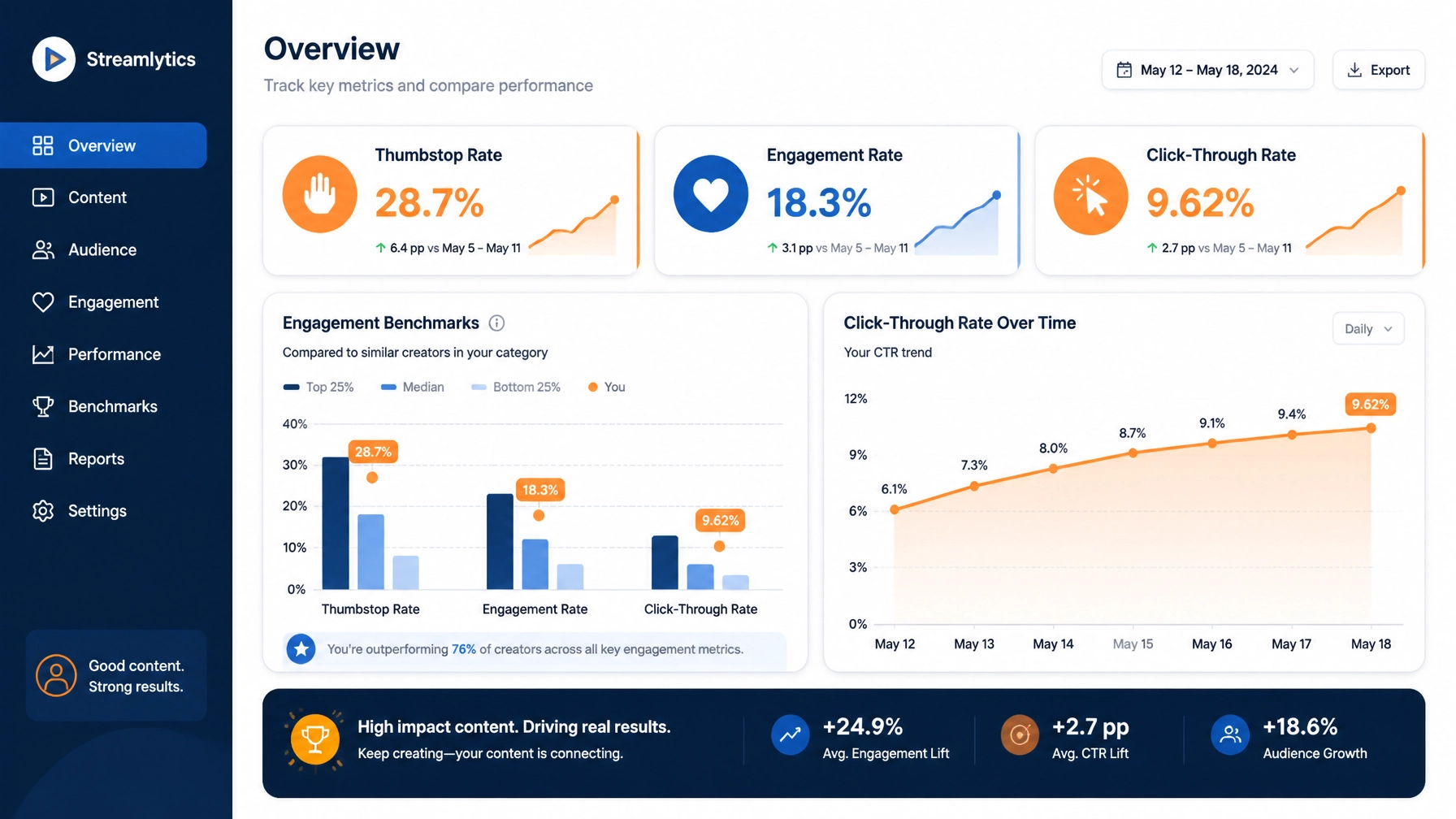
- The 3-Second Hook (Thumbstop Rate): Users decide whether to pause their scroll within 3 seconds. If your first frame or headline doesn't interrupt their cognitive autopilot, you’ve lost them. Aim for a 25%+ Thumbstop Rate (TSR).
- Snackable Native Formatting: The creative must look like organic content. Overly polished, corporate ads scream "ignore me." Native-style creative outperforms corporate graphics by up to 28% in engagement.
- Frictionless Action Loops: Every ad item in the feed must feature a clear, immediate call-to-action (CTA). In most cases, one tap should take the user directly to a relevant landing page, product page, lead form, or link hub.
- Interleaved Delivery: Ads cannot be stacked back-to-back, or you trigger instant user fatigue. They must be seamlessly interspersed with community updates or organic posts.
Phase 2: Execution Blueprint : How to Create or Use a Scroll-Based Feed
If you want to build a scroll-based ad feed from scratch, you are usually looking at frontend development, database optimization for infinite scroll queries, mobile responsiveness testing, moderation logic, analytics implementation, and ongoing server overhead.
The Hidden Cost: Custom development can run anywhere from $3,000 to $10,000+ in developer time for a basic implementation, and significantly more if you need user accounts, ranking logic, ad controls, reporting, and moderation tools.
For that reason, many marketers choose not to build the feed itself. Instead, they use existing environments where feed behavior, traffic, and delivery infrastructure already exist.
Step 1: Establish Your Central Hub
Before sending traffic into a scroll-based feed, you need a destination that converts. Don’t send traffic to a confusing homepage. Send it to a focused landing page, product page, lead capture form, or link-in-bio hub with one primary next step.
Step 2: Craft Native Feed Creative
To perform well in a scroll-based feed, your creative asset usually needs to follow a few practical rules:
- Visual Impact: Strong contrast, readable typography, and a clear focal point matter more than flashy design.
- Direct Value Proposition: Tell the user what they get quickly. In many cases, shorter beats smarter.
- Clear CTA: Use action-oriented language that matches the offer and landing page.
Step 3: Choose the Right Distribution Environment
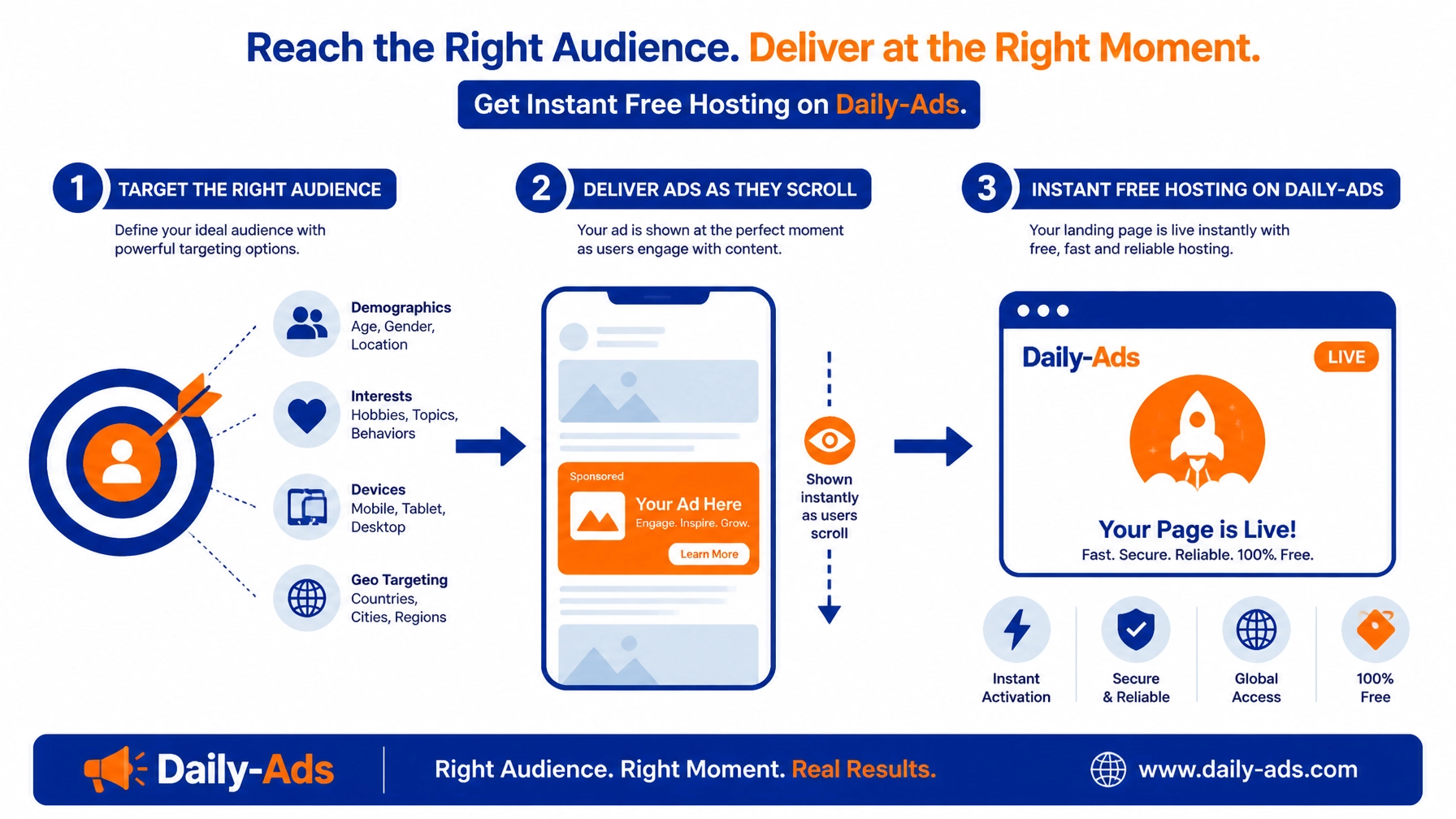
You do not need to build your own feed to test scroll-based advertising. Depending on your budget, audience, and goals, you can test placements across social platforms, native ad networks, creator communities, marketplace ecosystems, or tools such as Daily-Ads Swipe Ads (DailySwipes). The right choice depends less on hype and more on audience fit, setup speed, targeting needs, and cost tolerance.

The Truth About Free vs. Paid Ad Feed Options
A common misconception is that the only serious way to test feed-based advertising is with a large paid budget. That is not accurate. In practice, there are free, low-cost, and high-cost ways to validate scroll-based creative depending on the platform and your goals.
| Option | Typical Cost | Setup Time | Strengths | Trade-Offs |
|---|---|---|---|---|
| Organic Social Content | $0 | 1–3 Days | Fast feedback, no media spend, good for message testing | Reach is inconsistent and not guaranteed |
| Community Feed Placements | $0–Low Cost | Minutes to 1 Day | Lower barrier to entry, niche audiences, simple launch process | Audience scale may be smaller than major ad platforms |
| Native Ad Networks | Low to Moderate Daily Budget | 1–3 Days | Broad reach, content-style placements, scalable testing | Creative quality and landing page fit matter heavily |
| Paid Social (Meta, TikTok, LinkedIn) | Moderate to High Budget | 1–7 Days | Advanced targeting, scale, strong reporting | Rising CPMs, review delays, steeper learning curve |
| Custom Coded Ad Feed | $3,000–$10,000+ | 4–8 Weeks | Full control over UX, data, and monetization logic | High complexity, maintenance burden, slower validation |
| Daily-Ads Swipe Ads (DailySwipes) | Free plan available; paid options may vary by account level | Minutes | Simple entry point for testing scroll-style placements inside an existing platform | Best evaluated alongside audience fit, traffic quality, and your conversion goals |
The Hidden Cost: Paid distribution can fail because of weak hooks, poor landing pages, or mismatched audiences just as easily as budget limitations. Free options can fail too if they do not provide enough reach or buying intent. Evaluate the channel, not the hype.
Phase 3: Optimizing Your Scroll-Based Ad Feed for Maximum ROI
Once your scroll-based ads are live, the real work is measurement and iteration. Many campaigns fail because marketers focus on surface-level engagement without connecting it to downstream results.
To improve performance over a 90-day testing window, focus on a few core signals:
- Track Thumbstop Rates Weekly: If your TSR drops below 20%, your opening visual or headline may not be interrupting the scroll effectively.
- A/B Test Creative Variations: Test two distinct thumbnails, hooks, or color treatments to isolate what improves CTR.
- Monitor Conversion Drop-Off: If your ad CTR is over 1% but your landing page conversion rate stays under 2%, the traffic source may not be the main issue. The landing page, offer, or message match may need work.
Summary: Understand the Format Before You Spend
Scroll-based ad feeds matter because they align with how people now consume content online. The core lesson is not that one platform always wins. It is that feed-based advertising works best when the creative matches user behavior, the CTA is frictionless, and the destination page is tightly aligned with the promise in the ad.
If you want to test this format seriously, commit to a 90-day execution window. Start with one clear offer, one focused destination, and one or two distribution channels. Measure thumbstop rate, CTR, and conversion rate together. That process will teach you more than copying whatever the latest marketing hype is pushing this week.