Published: December 10, 2025 | Updated: February 21, 2026 | 19 min read

AI Sales Tools Comparison: Is Swarm AI Worth the Hype?

The AI sales tools market has exploded in 2025, with platforms promising to revolutionize how businesses generate revenue. Among these offerings, Swarm AI from biggestbusinessopportunity.com claims to increase website sales by up to 500 percent through automated marketing powered by collaborative AI intelligence. But how does this MLM-structured platform compare against established enterprise solutions like HubSpot, Salesforce Einstein, and other proven AI sales technologies? This analytical comparison cuts through marketing claims to evaluate actual capabilities, pricing structures, and real-world performance.

What This Comparison Covers: We analyze six categories of AI sales tools including Swarm AI, enterprise CRM platforms, conversation intelligence systems, sales enablement software, and specialized automation tools. Each evaluation examines features, pricing, technical architecture, customer support, integration capabilities, and documented results from actual users.

Understanding the AI Sales Tools Landscape

The 2025 AI sales technology ecosystem divides into distinct categories serving different organizational needs and budgets. Enterprise platforms like Salesforce and HubSpot provide comprehensive solutions integrating CRM, marketing automation, and AI-powered analytics into unified ecosystems. Specialized tools focus on specific functions such as conversation intelligence, lead generation, or email optimization. Understanding where each category excels helps businesses match solutions to their actual requirements rather than aspirational marketing promises.

Traditional enterprise platforms earn revenue through subscription fees tied to user seats, features accessed, and data storage consumed. Their business models depend on delivering measurable value that justifies ongoing costs, incentivizing continuous product improvement and customer retention. Network marketing approaches like Swarm AI operate differently, generating revenue through distributor recruitment and subscription sales within multi-level compensation structures. This fundamental difference in business model creates divergent priorities affecting product development, support quality, and long-term sustainability.

Swarm AI: Claims vs. Reality

Swarm AI markets itself as revolutionary non-generative sales AI that will transform online marketing. The platform claims to automate marketing continuously and increase website sales volume by up to 500 percent. According to promotional materials, the system requires no technical knowledge, operates through simple remote connection taking twenty minutes to set up, and represents the end of traditional web advertising and SEO.

Technical Architecture and Functionality

The core technology centers on browser extension nodes that participants run on their devices, contributing to what the company describes as a collaborative AI agent network. This decentralized approach positions individual computers as infrastructure supporting the marketing automation system. The platform claims these nodes communicate autonomously, training each other through swarm intelligence principles without human interaction.

However, several technical aspects raise questions about feasibility and effectiveness. The claim of intercepting relevant search traffic and redirecting it to subscriber websites encounters significant challenges. Modern browsers implement robust security measures preventing extensions from manipulating search results or redirecting organic traffic without explicit user permission. Google, Microsoft, and Mozilla maintain strict extension marketplace policies specifically prohibiting such behavior.

Search engines invest billions protecting result integrity from manipulation. Systems attempting to intercept searches and redirect traffic would violate multiple terms of service agreements and potentially infringe on trademark rights of businesses whose branded searches get redirected. The technical implementation required to accomplish claimed functionality would likely result in browser extension removal from official stores and possible legal action from affected parties.

Technical Feasibility Concern: No documentation or technical specifications explain how Swarm AI achieves search traffic interception within current browser security frameworks. Established AI sales platforms provide detailed technical architecture documentation, API specifications, and compliance certifications that Swarm AI promotional materials lack entirely.

Business Model Structure

The Swarm AI opportunity operates through multi-level marketing compensation plans extending twelve levels deep. Participants earn $550 annually per browser extension node, $25 for each direct referral, and $5 override payments from nodes throughout their downline. Additional recurring commissions come from customer subscriptions to the AI marketing service, with overrides paid through all twelve levels of organizational structure.

This compensation approach differs fundamentally from software-as-a-service models employed by legitimate AI sales platforms. Traditional SaaS companies generate revenue primarily from customers who use products to solve business problems. The Swarm AI structure generates significant revenue from participants who join the network and recruit others, with product subscriptions secondary to network building activities.

The mathematical sustainability of paying $550 annually per node plus multi-level overrides requires examination. If a participant builds even a modest network of one thousand nodes through twelve levels, the system must generate substantial revenue to fund these payments. Unless the marketing AI product generates proportional income from external customers genuinely using it for business purposes, the structure depends on new participant enrollment to fund existing member payouts.

Enterprise AI Sales Platforms: The Gold Standard

Established enterprise platforms represent mature technology with documented track records serving thousands of businesses. Understanding their capabilities provides context for evaluating newer entrants and claimed innovations.

Salesforce Einstein: Comprehensive AI Integration

Salesforce Einstein delivers AI functionality deeply integrated throughout the Sales Cloud ecosystem. The platform provides predictive lead scoring that analyzes historical patterns, current behaviors, and contextual signals to identify prospects most likely to convert. Automated opportunity insights examine deal characteristics comparing them against successful past sales to recommend next actions that improve close rates.

Sales forecasting leverages machine learning models processing pipeline data, rep performance history, and seasonal patterns to generate accurate revenue predictions. The system continuously learns from actual outcomes, refining predictions as it accumulates more data. Voice analytics transcribe sales calls in real time, analyzing sentiment, competitor mentions, and commitment language to provide coaching recommendations and deal risk assessments with ninety-three percent accuracy predicting outcomes.

Technical implementation requires dedicated configuration including custom field mapping and model training aligned to specific business processes. Salesforce provides comprehensive Trailhead learning modules helping teams develop expertise efficiently. Most organizations adopt phased rollout approaches, starting with basic features before introducing advanced capabilities as users gain proficiency.

Pricing structures reflect enterprise focus, with Sales Cloud starting at $25 per user monthly for basic functionality. Professional editions cost $100 per user monthly, while Enterprise access runs $165 monthly per seat. Einstein AI features distribute across tiers, with most advanced capabilities requiring Enterprise or Unlimited subscriptions. Additional costs include implementation consulting, data migration, and ongoing customization maintenance.

Companies report measurable improvements including higher lead conversion rates, faster deal closures, and enhanced forecasting accuracy. However, realizing these benefits requires consistent data quality management, regular model updates, and change management ensuring sales teams actually adopt new workflows. Organizations with poor data hygiene or resistance to process changes struggle to extract value despite significant investment.

HubSpot Sales Hub: Accessible AI Automation

HubSpot positions itself as the accessible alternative to Salesforce complexity, offering powerful AI capabilities within intuitive interfaces requiring minimal training. The Breeze AI suite includes three components addressing different needs. Breeze Copilot provides an integrated AI assistant analyzing CRM data in real time, answering questions about deal status, lead quality, and performance metrics conversationally.

Breeze Agents automate specific workflows including lead nurturing sequences, churn prevention outreach, and customer onboarding processes. These agents operate based on predefined rules combined with AI recommendations, executing actions without constant human supervision. Breeze Intelligence enriches contact records automatically, pulling data from a database of over two hundred million company profiles to complete missing information and improve segmentation accuracy.

Predictive lead scoring analyzes engagement patterns, demographic data, and behavioral signals to rank prospects by conversion probability. Email and task automation streamlines outreach by suggesting optimal send times, personalizing message content, and scheduling follow-ups based on prospect interactions. Conversation intelligence transcribes sales calls, extracting key discussion points, objections raised, and competitive mentions that inform coaching and strategy adjustments.

Pricing begins with a free tier offering basic CRM functionality suitable for small teams starting their sales automation journey. Starter plans cost $20 per seat monthly, Professional editions run $100 monthly per user, and Enterprise access reaches $150 per user monthly. Unlike Salesforce, HubSpot bundles marketing and sales features within unified plans rather than charging separately for each function, potentially reducing total cost of ownership for businesses needing both capabilities.

Implementation typically completes faster than Salesforce, with HubSpot reporting average deployment times of seventeen days compared to thirty-six days for competitors. The platform emphasizes ease of use, with most features accessible without extensive configuration or technical expertise. Organizations report significant productivity increases and shortened sales cycles after adoption, though results vary based on how completely teams embrace new processes.

Enterprise Platform Advantages

  • Proven technology serving thousands of businesses
  • Comprehensive integration ecosystems
  • Extensive training resources and documentation
  • Transparent pricing and contract terms
  • Regulatory compliance certifications
  • Dedicated customer success teams
  • Regular product updates and improvements
  • Documented case studies with verified results

Enterprise Platform Challenges

  • Higher upfront costs and ongoing subscriptions
  • Implementation complexity requiring expertise
  • Steep learning curves for some platforms
  • Customization often requires technical resources
  • Feature overload for smaller organizations
  • Contract commitments limiting flexibility
  • Integration costs with legacy systems

Specialized AI Sales Tools: Focused Excellence

Beyond comprehensive CRM platforms, specialized tools target specific sales functions with deep expertise. These solutions often integrate with existing CRMs rather than replacing them, providing best-in-class capabilities for particular use cases.

Gong: Conversation Intelligence Leader

Gong pioneered the conversation intelligence category, analyzing sales interactions across calls, emails, and meetings to extract actionable insights. The platform records and transcribes every customer conversation, applying natural language processing to identify patterns correlating with successful outcomes. Sales leaders access dashboards showing which behaviors, talk ratios, and discussion topics predict deal progression or stagnation.

The system flags competitive mentions, pricing discussions, and objection patterns allowing managers to intervene proactively when deals risk. Rep performance analytics compare individual metrics against top performers, highlighting skill gaps and coaching opportunities. Integration with CRM systems ensures conversation insights automatically update opportunity records, maintaining data accuracy without manual entry.

Pricing operates on annual contracts with costs scaling based on user count and feature selection. Most mid-market implementations run between $1,000 and $1,500 per user annually. Enterprise deployments with advanced features and dedicated support exceed $2,000 per seat yearly. While expensive compared to basic CRM tools, companies report that improved win rates and shortened sales cycles justify costs through increased revenue.

Apollo: AI-Powered Prospecting

Apollo provides access to a database of over 275 million verified contacts with advanced filtering enabling precise market segmentation. The platform combines contact data with engagement tools including email sequencing, built-in calling, and automated follow-ups. AI-powered lead scoring analyzes engagement patterns and firmographic data to prioritize prospects most likely to convert.

Integration with Salesforce, HubSpot, and other CRMs ensures seamless data flow between prospecting activities and pipeline management. Pricing begins with a free tier offering limited credits for small teams testing functionality. Paid plans start at $59 per user monthly, scaling to $149 monthly for professional features. Enterprise pricing includes unlimited seats and advanced customization.

The platform particularly appeals to sales development teams focused on outbound prospecting at scale. Built-in compliance features help organizations adhere to data privacy regulations including GDPR and CCPA. However, contact data accuracy varies by region and industry, with some users reporting significant bounce rates requiring additional verification.

Drift: Conversational Marketing Automation

Drift specializes in conversational marketing and sales, deploying AI-powered chatbots that engage website visitors in real time. The platform qualifies leads through intelligent conversations, books meetings automatically when prospects match ideal customer profiles, and routes qualified opportunities to appropriate sales representatives.

Integration with marketing automation and CRM systems ensures conversation data enriches contact records and triggers appropriate follow-up sequences. The AI learns from historical conversations, improving qualification accuracy and response quality over time. Pricing structures tier based on conversation volume and feature access, with most implementations costing between $2,500 and $7,500 monthly.

Organizations report significant increases in meeting bookings and lead qualification efficiency. However, effectiveness depends heavily on proper bot configuration and ongoing optimization based on conversation analytics. Poorly designed conversation flows frustrate visitors rather than converting them, requiring dedicated resources to maintain performance.

Explore Proven Sales Solutions

Compare transparent pricing and documented results from established AI sales platforms.

View Recommended Tools Read More Comparisons

Critical Evaluation Criteria

Selecting AI sales tools requires systematic evaluation across multiple dimensions rather than relying on marketing promises or surface-level feature comparisons. This framework helps organizations assess solutions objectively.

Technical Credibility and Documentation

Legitimate platforms provide detailed technical documentation explaining how systems work, what data they process, and how algorithms generate recommendations. Architecture diagrams, API specifications, security certifications, and compliance reports should be readily available. Companies confident in their technology welcome technical scrutiny and provide resources helping potential customers understand implementation requirements.

Warning signs include vague descriptions of "proprietary AI" without explanation of underlying methods, claims of revolutionary breakthroughs without peer-reviewed research or independent verification, and resistance to providing technical specifications under non-disclosure agreements. Established platforms maintain extensive developer documentation, public APIs, and integration partnerships demonstrating technical maturity.

Pricing Transparency and Total Cost

Reputable vendors publish clear pricing information including per-user costs, tiered feature access, and additional fees for implementation, training, or support. While enterprise deals often negotiate custom pricing, base price ranges should be publicly available. Hidden costs frequently emerge in integration fees, data migration charges, required professional services, and annual price increases.

Calculate total cost of ownership over three years including subscription fees, implementation consulting, training expenses, integration development, ongoing maintenance, and opportunity costs during deployment. Compare these figures against projected benefits based on conservative assumptions rather than best-case scenarios. Platforms offering suspiciously low prices often generate revenue through upgrade pressures, limited functionality, or poor support requiring expensive workarounds.

Customer Success and Support Infrastructure

Enterprise software purchases include relationships with vendor support organizations, not just access to technology. Evaluate available support channels including documentation quality, response time commitments, technical account management, and customer community engagement. Review support tier structures understanding what level of assistance comes with standard subscriptions versus premium support contracts.

Research customer satisfaction through independent review platforms like G2, Capterra, and TrustRadius where verified users share experiences. Pay particular attention to reviews discussing implementation challenges, support responsiveness, and vendor accountability when issues arise. Patterns of poor support or unresolved technical problems indicate organizational priorities that may not align with customer success.

Integration Ecosystem and Data Portability

Modern sales operations involve multiple systems working together, making integration capabilities critical. Evaluate native integrations with tools your organization already uses, API availability for custom connections, and data export capabilities ensuring you maintain ownership of information. Platforms that lock data within proprietary formats create vendor dependency and complicate future migrations.

Review integration marketplace quality assessing whether third-party connections receive ongoing maintenance or become abandoned over time. Poor integration quality causes data synchronization failures, duplicate records, and workflow breakdowns that diminish overall system value. Established vendors maintain certification programs for integration partners and provide technical resources supporting custom development.

Vendor Stability and Product Roadmap

Software subscriptions represent multi-year commitments requiring confidence that vendors will continue operating and improving products. Research company financial stability through funding history, revenue growth, and market position. Publicly traded companies provide quarterly financial reports, while private companies may share funding announcements and customer acquisition metrics.

Evaluate product roadmaps understanding vendor investment priorities and innovation pace. Platforms that haven't released significant updates in years may be in maintenance mode rather than active development. Conversely, companies constantly pivoting strategies or abandoning features indicate lack of clear vision potentially disrupting customer operations.

Red Flags: What to Avoid

Certain characteristics reliably indicate problematic vendors or unsustainable business models. Recognizing these warning signs protects organizations from costly mistakes and wasted resources.

Critical Warning Signs: Multi-level compensation structures focusing more on recruiting distributors than serving customers, extraordinary claims lacking third-party verification, absence of transparent technical documentation, pricing based primarily on network building rather than product value, and resistance to providing customer references or case studies with verifiable results.

Recruitment-Focused Business Models

When sales opportunities emphasize income from building downline organizations rather than customer value delivery, priorities misalign with sustainable business practices. Legitimate software companies generate revenue by solving customer problems profitably, investing heavily in product development, support infrastructure, and customer success. MLM structures divert resources toward distributor recruitment, compensation plan complexity, and promotional materials rather than product excellence.

Examine how much promotional content discusses the business opportunity versus actual product capabilities. If recruitment materials outnumber technical documentation and customer success stories, the organization prioritizes network growth over product quality. This imbalance typically results in underdeveloped technology, poor support, and eventual business failure when recruitment slows.

Impossible Performance Claims

Marketing promises of 500 percent sales increases without documented methodologies or verified case studies indicate either deception or fundamental misunderstanding of sales dynamics. Legitimate platforms provide specific, conservative performance improvements backed by controlled studies and customer testimonials with verifiable details.

Extraordinary claims require extraordinary evidence. When vendors assert revolutionary breakthroughs, ask for peer-reviewed research, independent testing results, and detailed technical explanations of mechanisms producing claimed results. Vague references to proprietary algorithms or patent-pending processes without substantiation suggest marketing fiction rather than technical reality.

Lack of Regulatory Compliance

Enterprise software handling customer data must comply with regulations including GDPR, CCPA, HIPAA, and industry-specific requirements. Reputable vendors maintain certifications like SOC 2, ISO 27001, and GDPR compliance, publishing security documentation and privacy policies detailing data handling practices.

Platforms lacking compliance certifications or refusing to provide security documentation cannot legally serve regulated industries. Organizations operating in healthcare, finance, or government face substantial liability using non-compliant tools. Even businesses in unregulated sectors risk data breaches and regulatory violations when vendors lack proper security controls.

Making the Right Choice for Your Organization

Selecting AI sales tools involves matching organizational needs, technical capabilities, and budget constraints with platform strengths and limitations. No single solution serves every situation optimally.

Small Business Considerations

Organizations with fewer than fifty employees typically benefit from unified platforms like HubSpot offering marketing, sales, and service functionality within single subscriptions. These all-in-one solutions reduce integration complexity and provide accessible pricing aligned with limited budgets. Free tiers enable experimentation before financial commitment, while straightforward upgrades accommodate growth.

Small teams should prioritize ease of use over extensive customization, selecting tools that deliver value quickly without requiring dedicated administrators. Look for platforms with strong community resources, comprehensive onboarding programs, and responsive support accessible through multiple channels. Avoid enterprise tools requiring professional services for basic configuration or platforms with complex licensing models designed for large organizations.

Mid-Market Requirements

Companies with fifty to five hundred employees face more complex needs including department coordination, advanced reporting, and integration with multiple business systems. Platforms like HubSpot Professional or Salesforce Professional editions provide flexibility supporting diverse workflows while maintaining reasonable costs per user.

Mid-market organizations should evaluate both platform capabilities and implementation partner ecosystems. Success often depends on experienced consultants who understand industry-specific requirements and can accelerate deployment while avoiding common pitfalls. Budget for professional services during initial setup and periodic optimization engagements maintaining system performance as business evolves.

Enterprise Demands

Large organizations require enterprise-grade platforms offering extensive customization, robust security controls, and scalability handling thousands of users across multiple regions. Salesforce Enterprise, HubSpot Enterprise, and similar solutions provide necessary governance features, compliance certifications, and dedicated support justifying higher costs.

Enterprise deployments involve substantial change management ensuring adoption across diverse teams with varying technical capabilities. Allocate resources for comprehensive training programs, ongoing optimization, and integration maintenance. Consider hybrid approaches combining best-in-class specialized tools integrated through unified data platforms rather than forcing single-vendor solutions that compromise on specific capabilities.

Final Analysis: Swarm AI vs. Established Platforms

When comparing Swarm AI against established enterprise solutions, several critical differences emerge that should inform decision-making. Legitimate AI sales platforms demonstrate technical maturity through transparent documentation, independent verification of claims, and regulatory compliance certifications. They operate sustainable business models focused on customer success rather than distributor recruitment.

Swarm AI's multi-level marketing structure, extraordinary performance claims without verification, and technical feasibility questions regarding search traffic interception create substantial risk. The platform lacks publicly available technical documentation, independent case studies, integration certifications, and transparent pricing typical of reputable B2B software vendors.

Recommendation for Sales Teams: Businesses seeking AI-powered sales tools should prioritize established platforms with proven track records including HubSpot, Salesforce, Gong, or Apollo depending on specific needs and organizational size. These solutions provide technical credibility, comprehensive support, regulatory compliance, and documented results justifying investment.

Regarding Swarm AI: The combination of MLM compensation structure, lack of technical transparency, and extraordinary claims without verification suggest approaching this opportunity with extreme caution. Organizations requiring legitimate sales automation should select platforms with established reputations, clear pricing, and verifiable customer success rather than products emphasizing income opportunity through network building.

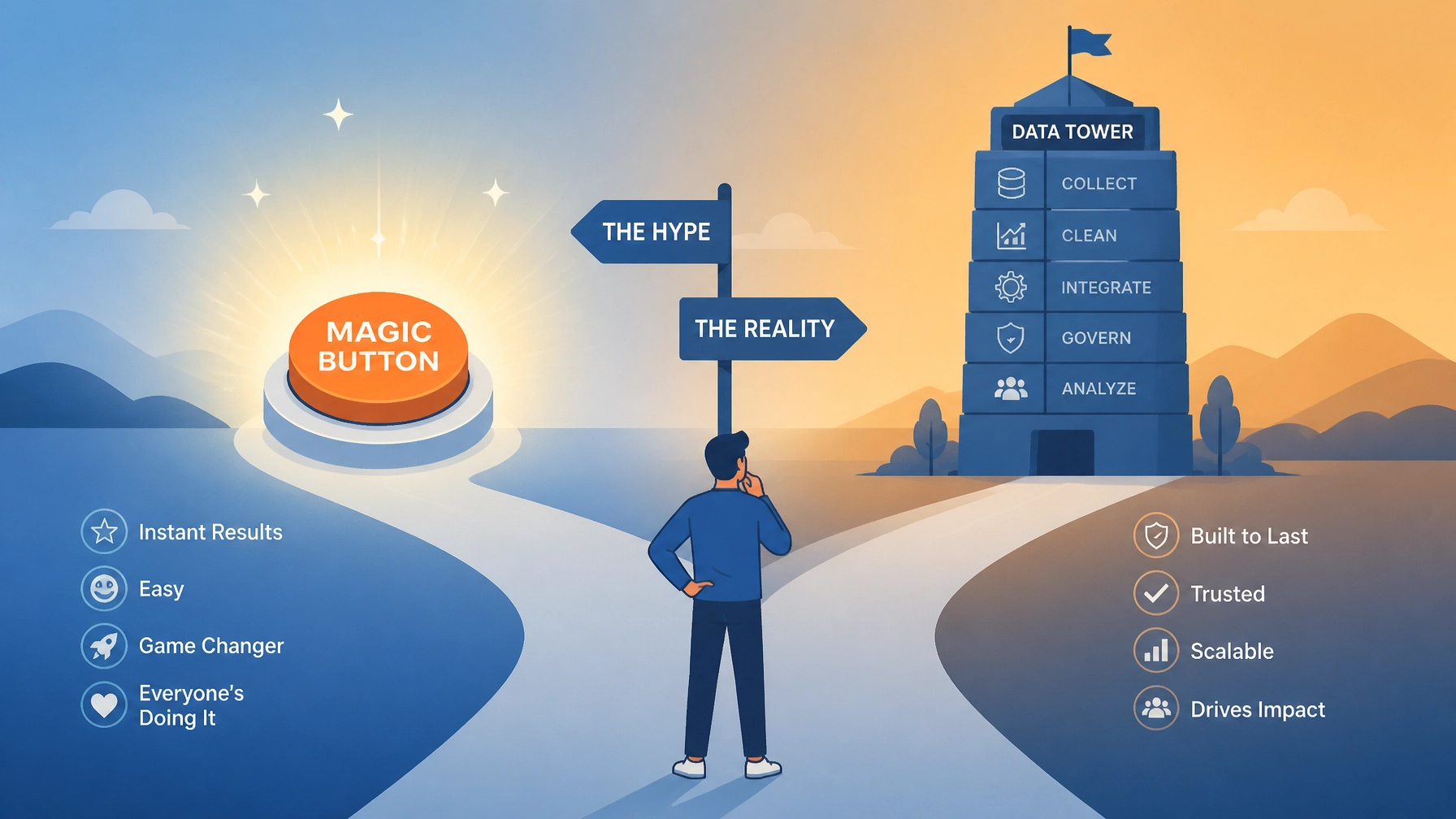
The hype surrounding revolutionary sales increases and passive income through browser nodes obscures practical realities of AI sales technology. Real improvements come from platforms investing heavily in research, development, customer success, and continuous product improvement—characteristics absent from recruitment-focused business models.

Implementation Best Practices

Successfully deploying AI sales tools requires more than selecting appropriate platforms. Organizations must manage change, ensure data quality, and establish processes maintaining long-term value.

Start With Data Foundation

AI systems depend on quality data generating accurate insights and recommendations. Before implementing new platforms, audit existing customer information identifying duplicates, incomplete records, and inconsistent formatting. Clean data produces better AI outputs, while poor data quality results in flawed predictions and misguided automation.

Establish data governance policies defining ownership, quality standards, and maintenance responsibilities. Assign dedicated resources monitoring data health metrics including completeness rates, duplicate percentages, and freshness indicators. Schedule regular cleanup activities preventing gradual degradation that diminishes system effectiveness over time.

Pilot Before Full Deployment

Launch new platforms with small pilot groups testing functionality and workflows before organization-wide rollout. Select early adopters representing diverse roles and skill levels providing comprehensive feedback. Use pilot periods identifying configuration adjustments, training gaps, and integration issues correctable before broader deployment.

Measure pilot performance against specific success criteria including adoption rates, productivity improvements, and user satisfaction. Document lessons learned and adjust implementation plans accordingly. Successful pilots generate internal advocates who help drive adoption when expanding to additional teams.

Invest in Training and Change Management

Technology alone doesn't transform sales operations—people using tools effectively drive improvements. Develop comprehensive training programs addressing both technical skills and workflow changes. Provide multiple learning formats including live sessions, recorded videos, written documentation, and hands-on practice environments.

Communicate clearly about why changes occur, how new tools benefit individual users, and what support resources exist helping teams adapt. Address resistance through listening sessions understanding concerns and adjusting approaches where reasonable. Celebrate early wins publicly reinforcing positive behaviors and encouraging broader adoption.

Compare Your Options Thoroughly

Access detailed reviews and comparison guides for leading AI sales platforms.

Explore Vetted Solutions Read More Analysis

Future of AI in Sales Technology

Understanding emerging trends helps organizations make strategic decisions positioning themselves for evolving capabilities while avoiding premature adoption of immature technologies.

Agentic AI and Autonomous Workflows

The next generation of sales AI moves beyond recommendations toward autonomous action within defined parameters. Agentic systems will handle routine tasks including meeting scheduling, follow-up communication, data entry, and initial prospect qualification without human intervention. Salesforce Agentforce and HubSpot Breeze Agents represent early examples of this evolution.

Success with agentic AI requires clear guardrails defining acceptable autonomous actions and escalation triggers requiring human judgment. Organizations must balance efficiency gains from automation against risks of inappropriate AI decisions damaging customer relationships. Start with low-risk workflows gradually expanding autonomous capabilities as systems prove reliable.

Enhanced Personalization at Scale

AI enables hyper-personalized customer experiences analyzing individual behaviors, preferences, and contexts tailoring interactions accordingly. Future systems will generate customized content, recommendations, and engagement strategies for each prospect based on comprehensive data analysis impossible for humans to process manually.

Privacy regulations and customer expectations require transparent data usage and control mechanisms allowing individuals managing their information. Platforms balancing personalization capabilities with privacy protection will gain competitive advantages as regulatory scrutiny increases and consumer awareness grows.

Integration of Multiple AI Models

Rather than relying on single AI engines, leading platforms will incorporate multiple specialized models optimized for different tasks. Large language models handle content generation and conversation, predictive models forecast outcomes and identify patterns, and computer vision systems analyze visual content. Orchestration layers coordinate these specialized models producing comprehensive solutions exceeding capabilities of any single approach.

Organizations should select platforms with flexible architectures supporting this multi-model approach rather than locked into proprietary systems limiting future capabilities. Open APIs, standard integration protocols, and commitment to emerging technologies indicate vendor readiness for evolving AI landscape.

Conclusion

The AI sales tools market offers genuine solutions delivering measurable value alongside opportunistic offerings exploiting technology hype. Distinguishing between legitimate platforms and problematic alternatives requires analytical evaluation examining technical credibility, business model sustainability, and alignment with organizational needs.

Established platforms like HubSpot, Salesforce, Gong, and Apollo represent proven technologies serving thousands of businesses with transparent operations, comprehensive support, and documented results. These solutions justify investment through productivity improvements, revenue growth, and competitive advantages despite higher upfront costs and implementation complexity.

Swarm AI's positioning emphasizes income opportunity through network building rather than product excellence, raising substantial concerns about priorities and sustainability. The lack of technical documentation, extraordinary performance claims without verification, and MLM compensation structure suggest approaching with extreme caution. Organizations seeking legitimate AI sales automation should prioritize platforms demonstrating technical maturity, customer focus, and alignment with software industry best practices.

Success with AI sales technology depends less on revolutionary breakthroughs than on disciplined implementation, quality data, effective training, and continuous optimization. Choose platforms offering transparent operations, comprehensive support, and proven track records. Avoid solutions promising extraordinary results through proprietary secrets or emphasizing recruitment over customer value. The future of sales belongs to organizations combining sophisticated technology with human expertise, not those chasing hype or pursuing passive income through questionable business models.

Disclaimer: This article is provided for informational and educational purposes only and should not be considered financial, investment, business, or legal advice. The content reflects personal opinions and experiences and may include references to third-party products, services, or platforms. Results mentioned, if any, are not typical and do not guarantee future performance. You are solely responsible for conducting your own research and due diligence before making any decisions or taking any action based on the information presented. Any risks assumed are entirely your own. Daily-Ads.com assumes no responsibility for losses, damages, or outcomes resulting from the use of the information contained in this article. Some links in this article may be affiliate links, which means a commission may be earned at no additional cost to you.